
AOMEI Data Recovery Review & Better Pick
Losing files is stressful. One wrong deletion, a formatted drive, a corrupted file system, or a virus attack can make important documents, photos, and videos disappear in seconds. That is why many Windows users search for aomei data recovery when they need a simple data recovery software solution.
However, choosing the right recovery tool matters. A tool may find deleted files, but it may not handle formatted drives, file system errors, system reinstallation, or virus-damaged data equally well. This guide reviews AOMEI data recovery, compares it with Magic Data Recovery, and explains why Magic Data Recovery is often the better choice for Windows users who want a practical, beginner-friendly recovery solution.
Supports Windows 7/8/10/11 and Windows Server
Table of Contents
What Is AOMEI Data Recovery?
Many users use the phrase AOMEI data recovery to refer to AOMEI’s recovery products, especially AOMEI FastRecovery and MyRecover. AOMEI’s official pages describe FastRecovery as a Windows recovery tool for deleted or lost files, with Quick Scan, Deep Scan, preview, filtering, and support for HDDs, SSDs, USB drives, SD cards, PCs, laptops, and cameras.
In older or related AOMEI pages, AOMEI data recovery also appears with MyRecover, which focuses on Windows PC recovery and iPhone/iPad recovery. The page says its Windows solution supports common storage devices and file systems such as NTFS, FAT32, exFAT, and ReFS.
In short, AOMEI data recovery is a real recovery category from AOMEI. It mainly targets users who need to recover deleted, lost, or formatted files from Windows storage devices.
Common Cases Where AOMEI Data Recovery Can Help
AOMEI FastRecovery’s help page says the software can recover data lost due to deletion, formatting, system crash, and virus attack. It supports Windows notebooks and desktop computers.
Typical use cases include:
- Accidentally deleted files
- Emptied Recycle Bin recovery
- Formatted partition recovery
- USB drive or SD card recovery
- File loss after system crash
- Virus-related data loss
- Lost photos, videos, documents, emails, and archives
That makes AOMEI data recovery a reasonable option for basic and intermediate recovery tasks. Still, users should understand one important rule: recovery success depends heavily on whether the lost data has already been overwritten.
Microsoft also advises users to minimize or avoid using the computer after file loss because new files may overwrite the deleted file space.
Pros and Limits of AOMEI Data Recovery
Pros of AOMEI Data Recovery
AOMEI data recovery has several practical advantages:
- Simple workflow
AOMEI describes a three-step process: select a partition, scan, preview, and recover.
- Quick Scan and Deep Scan
Quick Scan helps find recently deleted files faster. Deep Scan checks more sectors and may help with older or more complex data loss.
- Preview before recovery
Preview reduces mistakes because users can check files before restoring them.
- Filtering options
Users can filter by file type or file size, which helps when a scan finds thousands of files.
- Windows and Server support
AOMEI lists support for Windows 11, 10, 8, 7, and multiple Windows Server versions.
Limits of AOMEI Data Recovery
Even though AOMEI data recovery is useful, it is not perfect for every user.
First, recovery is never guaranteed after serious overwriting. If you keep downloading, installing, or saving files to the affected drive, the recovery chance drops.
Second, some users may find AOMEI’s product naming confusing. Search results may show AOMEI FastRecovery, MyRecover, AOMEI Recovery, or older AOMEI data recovery pages. That can make it harder for beginners to know which product they need.
Third, users who only need a focused Windows recovery tool may prefer a simpler alternative with strong file type support, clear recovery steps, and practical recovery scenarios.
That is where Magic Data Recovery becomes a strong option.
AOMEI Data Recovery vs Magic Data Recovery
The table below compares AOMEI data recovery with Magic Data Recovery from a practical user perspective.
Comparison Point | AOMEI Data Recovery | Magic Data Recovery | Better Choice |
Main platform | Mainly Windows; some AOMEI pages also mention iOS recovery | Windows-focused recovery | Magic for Windows users |
Deleted file recovery | Yes | Yes | Both |
Formatted drive recovery | Yes | Yes | Both |
File system error recovery | Supported in common recovery scenarios | Designed for corrupted or inaccessible files and drives | Magic |
System crash/reinstallation data loss | Supports crashed computer recovery | Suitable for system crash and reinstalled Windows scenarios | Magic for simpler Windows recovery |
Virus damage recovery | Mentioned by AOMEI help docs | Supports virus-related data loss scenarios | Both |
File type support | AOMEI pages mention 1000+ or 200+ depending on product/page | Third-party listing mentions 5000+ file types | Magic |
Ease of use | Beginner-friendly | Clean wizard-style workflow | Both |
Folder structure recovery | Not the main emphasis | Softpedia notes that recovered files can retain folder structure | Magic |
Best fit | Existing AOMEI users, mixed AOMEI ecosystem | Windows users who want a focused recovery tool | Magic |
Magic Data Recovery’s official site says it can recover deleted, formatted, or corrupted files from internal/external drives, USB devices, SD cards, and SSDs. Softpedia also notes that Magic Data Recovery performs deep scans, helps reveal deleted files’ original locations, and supports a type-based filtering system.
Why We Recommend Magic Data Recovery
If you are searching for aomei data recovery, you probably want one thing: get lost files back without making the situation worse. Magic Data Recovery fits that goal well because it focuses on real recovery problems instead of only listing features.
1. It solves common Windows data loss problems
Magic Data Recovery helps recover files lost because of:
- Accidental deletion
- Drive formatting
- File system errors
- Windows reinstallation
- Virus damage
- Corrupted partitions
- Inaccessible drives
- Lost photos, videos, documents, archives, and emails
For example, if you formatted a USB drive before copying photos, Magic Data Recovery can scan the device and help locate recoverable files. If Windows was reinstalled and old files disappeared, it can scan the affected drive for remaining data traces.
2. It supports more file recovery needs
Software Informer lists Magic Data Recovery as supporting 5000+ file types, including documents, images, videos, audio, and archives. This matters because real users rarely lose only one file type. A student may lose DOCX and PDF files. A photographer may lose JPG, RAW, and MP4 files. An office user may need Excel sheets, ZIP archives, and email files.
3. It keeps the process simple
A good file recovery tool should not force users to understand sectors, clusters, or file signatures. Magic Data Recovery uses a clear workflow:
- Choose the lost-file location.
- Scan the drive.
- Preview found files.
- Recover selected files to a safe location.
This approach helps beginners act quickly without making risky decisions.
4. It helps with corrupted or unreadable drives
Magic Data Recovery is especially useful when Windows detects a drive but cannot open it normally. A public Trustpilot review mentions recovering many files from an external drive that had become unreadable. User reviews do not guarantee every result, but they show the type of real-world problem the software targets.
5. It offers strong value for Windows users
If you only need Windows data recovery, you may not want a broader product ecosystem. Magic Data Recovery focuses on recovering Windows files from common storage devices. Therefore, it may feel more direct and efficient than choosing between several AOMEI-branded recovery pages or products.
If you are looking for a more focused solution, it is worth trying Magic Data Recovery before you give up on deleted, formatted, or corrupted files.
How to Recover Lost Files Safely
Whether you use AOMEI data recovery or Magic Data Recovery, follow these best practices.
Step 1: Stop using the affected drive
Do not save new files, install software, or download anything to the drive where data was lost. New data may overwrite recoverable files.
Step 2: Install the recovery software on another drive
If possible, install Magic Data Recovery on a different partition or external drive. This reduces the risk of overwriting lost files.
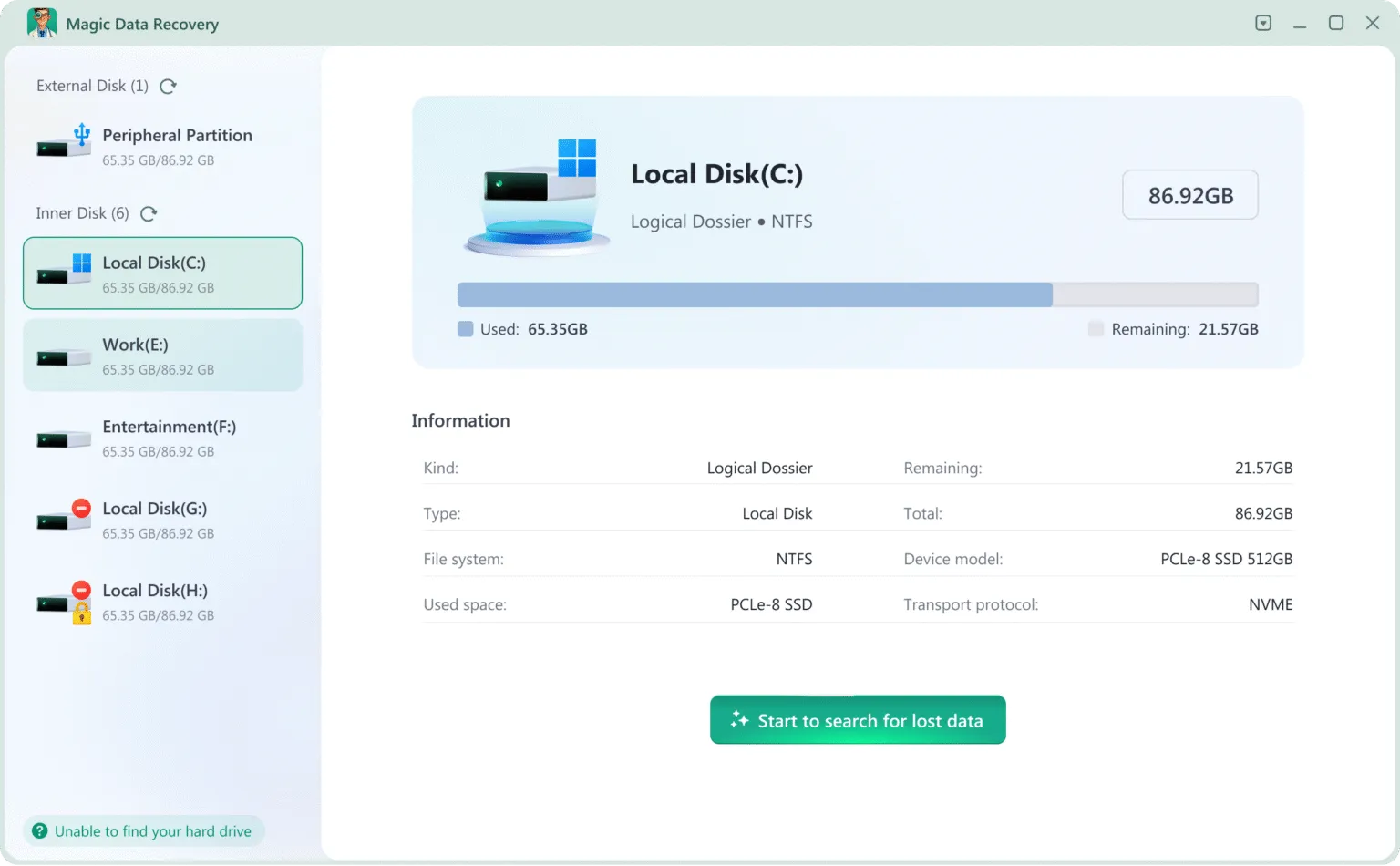
Step 3: Scan the correct location
Select the drive, partition, USB device, SD card, or folder where the data disappeared. Start with a quick scan if the deletion happened recently. Use deep scan for formatted, corrupted, or older data loss cases.
Step 4: Preview before recovery
Preview documents, images, videos, and other files when available. This helps you recover the correct files instead of restoring unnecessary duplicates.

Step 5: Recover to a different drive
Never save recovered files back to the same damaged or formatted drive. Use another internal drive, external HDD, SSD, or USB device.
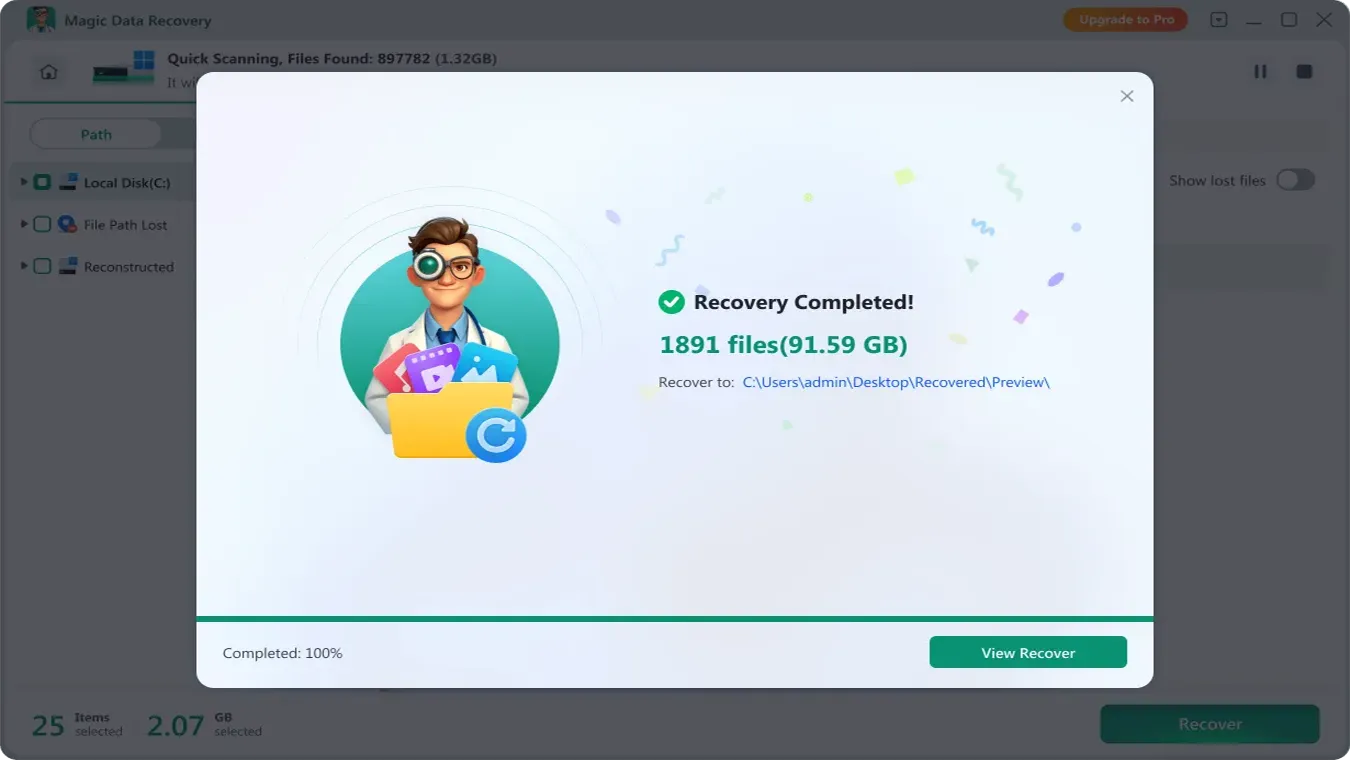
Step 6: Back up recovered files
After recovery, create at least one backup. For important data, use both an external drive and cloud storage.
Who Should Use AOMEI Data Recovery?
Choose AOMEI data recovery if:
- You already use AOMEI tools.
- You want a recovery product from the same software ecosystem.
- You need AOMEI’s crashed computer recovery workflow.
- You prefer AOMEI’s interface and support model.
AOMEI can be a solid choice for many Windows users. Its scan modes, preview feature, and filtering tools make recovery easier than manual methods.
Who Should Use Magic Data Recovery?
Choose Magic Data Recovery if:
- You want a focused Windows recovery tool.
- You lost files after deletion, formatting, file system errors, reinstalling Windows, or virus damage.
- You need support for many file types.
- You want a simple scan-preview-recover process.
- You prefer a practical tool for HDDs, SSDs, USB drives, SD cards, and external drives.
For most Windows users who search for aomei data recovery but still compare alternatives, Magic Data Recovery is the better recommendation because it offers a clear recovery workflow, broad file type support, and strong coverage for everyday data loss scenarios.
Final Verdict: Is AOMEI Data Recovery Worth It?
AOMEI data recovery is worth considering if you want a known Windows recovery tool with scan modes, preview, filtering, and support for common storage devices. It can help with deleted files, formatted drives, system crashes, and virus-related loss.
However, Magic Data Recovery is the better pick for many Windows users because it focuses on the most common recovery pain points: deleted files, formatted disks, corrupted drives, file system errors, Windows reinstallation, and virus damage. It also offers a beginner-friendly workflow and broad file type coverage.
If you want a more efficient solution for Windows file recovery, try Magic Data Recovery and scan your lost-file drive before new data overwrites the files.
Supports Windows 7/8/10/11 and Windows Server
FAQs
What is AOMEI data recovery?
AOMEI data recovery usually refers to AOMEI’s file recovery tools, such as AOMEI FastRecovery or MyRecover. These tools help Windows users recover deleted, lost, or formatted files from devices like HDDs, SSDs, USB drives, SD cards, and external drives. They offer scan modes, preview, and file filtering for easier recovery.
Is AOMEI data recovery safe to use?
AOMEI data recovery is generally safe when you download it from official sources and avoid installing it on the drive where files were lost. The biggest risk is not the tool itself, but overwriting deleted data. To improve recovery chances, stop using the affected drive and recover files to another location.
Can AOMEI data recovery recover formatted files?
Yes, AOMEI data recovery can help recover files from formatted drives if the original data has not been overwritten. A deep scan usually works better for formatted partitions because it checks more storage areas. However, no recovery tool can promise complete recovery after heavy disk usage or full overwrite.
How does Magic Data Recovery compare with AOMEI data recovery?
Magic Data Recovery and AOMEI data recovery both support deleted file recovery, formatted drive recovery, and common storage devices. Magic Data Recovery is a stronger choice for Windows users who want a focused tool for deletion, formatting, file system errors, system reinstallation, virus damage, corrupted drives, and broad file type recovery.
Can Magic Data Recovery recover files after Windows reinstallation?
Yes, Magic Data Recovery can help in Windows reinstallation scenarios if the lost files still exist on the drive and have not been overwritten. You should stop using the computer immediately, connect the drive safely, scan it, preview found files, and save recovered data to a different storage device.
Why should I not recover files to the same drive?
You should not recover files to the same drive because the recovery process may overwrite other lost files that still remain recoverable. Always save recovered data to another partition, external drive, or USB device. This rule applies whether you use AOMEI data recovery, Magic Data Recovery, or another recovery tool.
Is Magic Data Recovery good for beginners?
Yes, Magic Data Recovery is suitable for beginners because it follows a simple scan, preview, and recover workflow. Users do not need to understand technical recovery terms to start. It is especially useful for common problems like accidental deletion, formatted USB drives, corrupted partitions, and missing files after Windows problems.
Which is better: AOMEI data recovery or Magic Data Recovery?
AOMEI data recovery is a good option for users already familiar with AOMEI products. However, Magic Data Recovery is often the better choice for Windows users who want a direct, practical, and easy recovery solution for deleted, formatted, corrupted, reinstalled-system, and virus-damaged data loss scenarios.

Jason is a data recovery and technical support specialist with over 15 years of hands-on experience. He has worked extensively with frontline users, troubleshooting difficult data loss cases and providing practical recovery solutions for accidental deletion, formatted drives, damaged file systems, lost partitions, system failures, and other recovery emergencies. His expertise also includes backup and restoration, file repair, and disaster recovery, with a strong emphasis on safe, reliable, and technically accurate guidance.