
How to Fix a Damaged USB Flash Drive (Step-by-Step Guide)
If you’re searching for how to fix a damaged USB flash drive, you’re not alone. Many users experience issues like “USB not recognized,” “please format the disk,” or missing files without warning. These problems often happen unexpectedly and can put important data at risk.
Fortunately, most USB drive issues are caused by logical errors rather than physical damage. That means they can often be repaired. In this guide, you’ll learn how to fix a damaged USB flash drive step by step with usb drive solution, based on real-world scenarios. We’ll also explain how to safely recover your data before attempting any fixes to avoid permanent loss.
Table of Contents
Common Signs of a Damaged USB Flash Drive
Before you start fixing the problem, identify the symptoms:
- USB not recognized by the system
- “You need to format the disk” error
- Files disappear or become inaccessible
- USB shows as RAW or 0 bytes
- Device becomes extremely slow
These issues usually indicate either:
- Logical damage (file system errors, recoverable)
- Physical damage (hardware failure, limited solutions)
Understanding the difference is key when learning how to fix a damaged USB flash drive effectively.
How to Fix a Damaged USB Flash Drive: Common Scenarios and Solutions
1. USB Not Recognized
This is one of the most common problems.
Causes
- Outdated or corrupted drivers
- USB port malfunction
- Power supply issues
Fix Steps
Step 1: Try another port or computer
This quickly rules out external issues.
Step 2: Update drivers
- Open Device Manager
- Expand USB controllers
- Right-click device → Update
Step 3: Assign drive letter
- Open Disk Management
- Right-click USB → Change Drive Letter
These steps often resolve recognition issues without further action.
2. USB Asks to Format (File System Error)
This scenario clearly indicates file system corruption.
Important
Do not format immediately. You may overwrite recoverable data.
Best Method: Recover Data First
When dealing with file system errors, the safest approach is to recover files before repair.
Magic Data Recovery is designed for this situation. It supports:
- Formatted USB recovery
- RAW USB repair scenarios
- Deleted file recovery
- File system error recovery
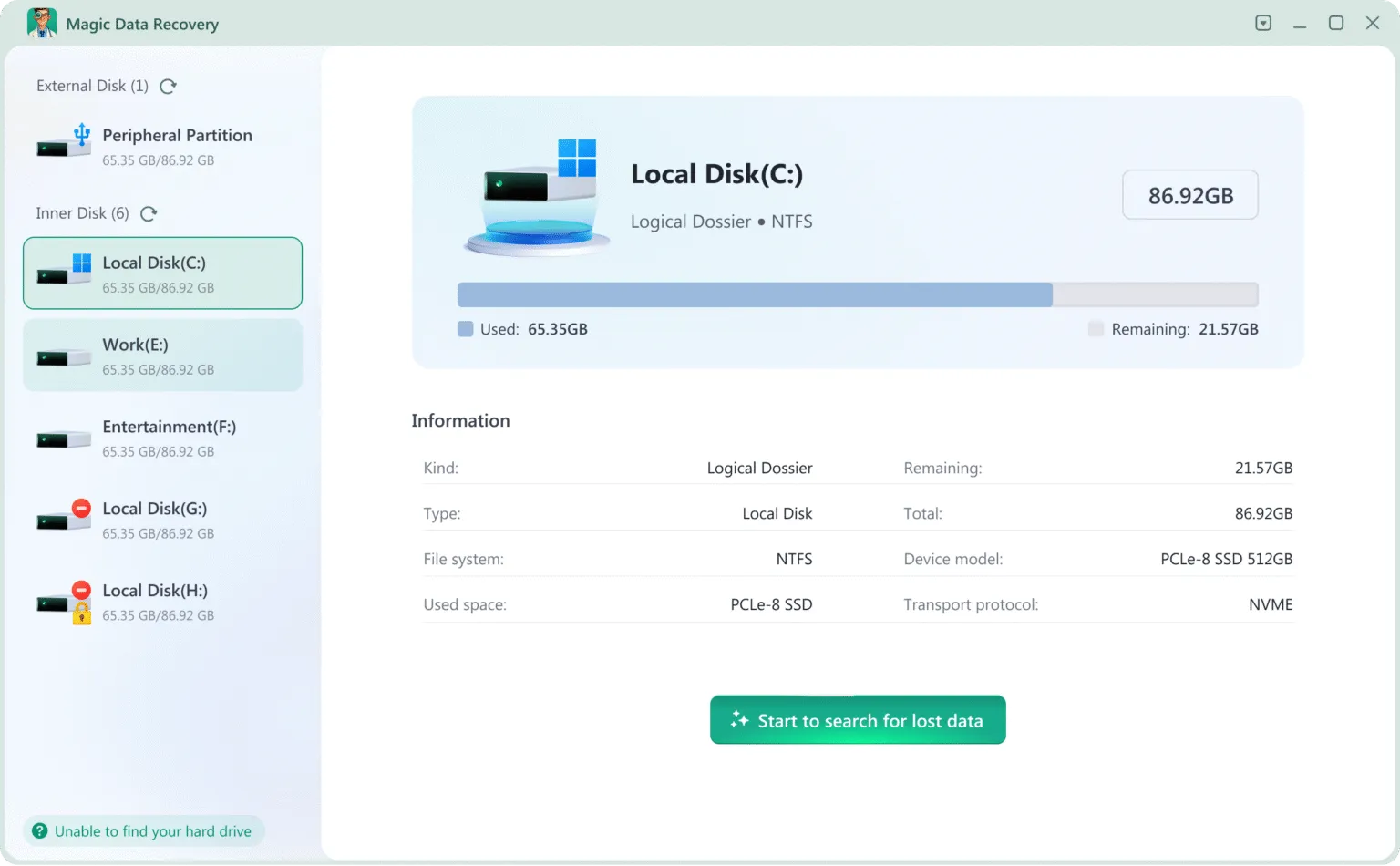
Why Magic Data Recovery Is a Reliable Solution
- Advanced deep scan for corrupted drives
- Supports FAT32, exFAT, NTFS
- Recovers photos, videos, documents, and more
- Simple interface suitable for beginners
Real Use Case
If your USB suddenly shows a format prompt after plugging in, Magic Data Recovery can scan and restore your files before formatting.
👉 If you need a safer way to fix errors without losing data, trying Magic Data Recovery is a practical choice.
Supports Windows 7/8/10/11 and Windows Server
After Recovery: Format the USB
- Right-click USB → Format
- Select file system
- Click Start
This completes the repair process.
3. USB Shows RAW File System
A RAW USB means the system cannot read its structure.
Solution
Step 1: Recover data using Magic Data Recovery
This ensures no data is lost during repair.
Step 2: Repair with CHKDSK
chkdsk X: /f
Replace X with your drive letter.
If CHKDSK fails, formatting is required.
4. Partition Lost or USB Shows Empty
Partition loss often happens due to improper ejection or virus attacks.
Fix Options
Option 1: Recreate partition
- Open Disk Management
- Locate unallocated space
- Create new volume
Option 2: Recover lost data (Recommended)
Magic Data Recovery is especially effective here because:
- It detects lost partitions
- It recovers files even without partition structure
- It works after accidental formatting
Example Scenario
If your USB appears empty but still shows used space, the partition may be lost. A deep scan can recover those hidden files.
5. Files Missing or Deleted
Sometimes files disappear due to malware or accidental deletion.
Fix Steps
Step 1: Show hidden files
attrib -h -r -s /s /d X:\*.*
Step 2: Use recovery software
Magic Data Recovery helps because:
- It restores permanently deleted files
- It previews files before recovery
- It maintains original structure
This is one of the most effective ways to fix data-related issues.
6. Physically Damaged USB Drive
Signs
- Bent or broken connector
- No response when plugged in
- Overheating or unusual smell
Solution
Software cannot fix hardware damage. In this case:
- Stop using the USB immediately
- Contact professional data recovery services
Best Methods to Fix a Damaged USB Flash Drive Without Data Loss
When learning how to fix a damaged USB flash drive, always follow this safe workflow:
- Identify the problem (logical vs physical)
- Recover data first
- Repair file system or format
- Verify USB functionality
Skipping the recovery step increases the risk of permanent data loss.
Best Practices to Prevent USB Damage
- Always eject safely
- Avoid using infected computers
- Back up important files regularly
- Do not interrupt file transfers
- Use antivirus protection
These simple habits reduce the risk of future damage.
Conclusion
Knowing how to fix a damaged USB flash drive is essential for protecting valuable data. Most USB issues are caused by logical errors such as file system corruption, formatting problems, or partition loss. These can often be resolved with the right approach.
Among available usb drive solutions, Magic Data Recovery stands out because it focuses on safe data recovery before repair. It handles multiple scenarios, including deleted files, formatted drives, and corrupted file systems. This makes it a reliable choice compared to manual methods that may risk data loss.
If you want a practical and efficient way to recover files and fix USB issues, Magic Data Recovery is worth considering.
Supports Windows 7/8/10/11 and Windows Server
FAQs
What is the safest way to fix a damaged USB flash drive?
Can I fix a damaged USB flash drive without formatting it?
Why does my USB drive show as RAW?
How do I recover files from a corrupted USB drive?
Is CHKDSK safe for repairing USB drives?
What causes USB flash drives to become damaged?
Can a physically damaged USB drive be repaired?
How can I prevent USB flash drive corruption?

Jason is a data recovery and technical support specialist with over 15 years of hands-on experience. He has worked extensively with frontline users, troubleshooting difficult data loss cases and providing practical recovery solutions for accidental deletion, formatted drives, damaged file systems, lost partitions, system failures, and other recovery emergencies. His expertise also includes backup and restoration, file repair, and disaster recovery, with a strong emphasis on safe, reliable, and technically accurate guidance.